Customer Logins

Obtain the data you need to make the most informed decisions by accessing our extensive portfolio of information, analytics, and expertise. Sign in to the product or service center of your choice.

Customer Logins

My Logins

All Customer Logins
S&P Global
Explore S&P Global
  • S&P Global
  • S&P Dow Jones Indices
  • S&P Global Market Intelligence
  • S&P Global Mobility
  • S&P Global Commodity Insights
  • S&P Global Ratings
  • S&P Global Sustainable1
Close
Discover more about S&P Global’s offerings.
Investor Relations
  • Investor Relations Overview
  • Presentations
  • Investor Fact Book
  • News Releases
  • Quarterly Earnings
  • SEC Filings & Reports
  • Executive Committee
  • Merger Information
  • Governance
  • Stock & Dividends
  • Shareholder Services
  • Contact
English
  • Español
  • 中文网站
  • Português
  • 한국어
  • हिंदी
  • 日本語
Support
  • Get Support
  • System Notifications
  • Delivery Platforms
  • Regulatory Engagement
Login
  • Commodity Insights Login
  • Access IHS Markit Products
Register
logo Commodity Insights
  • Commodities
  • Products & Solutions
  • News & Research
  • Pricing & Benchmarks
  • Events
  • Sustainable1
  • Who We Are
  • S&P Global
  • S&P Dow Jones Indices
  • S&P Global Market Intelligence
  • S&P Global Mobility
  • S&P Global Commodity Insights
  • S&P Global Ratings
  • S&P Global Sustainable1
  • Oil Upstream LNG Natural Gas Electric Power Coal Shipping Chemicals Metals Agriculture
    Latest in Commodities
    Listen: Change Makers: Rodney Clemente, Energy Recovery

    Energy Recovery, with roots in the desalination industry, designs and manufactures energy-efficiency...

    India woos upstream oil and gas investors with changes on revenue sharing, fiscal incentives

    India has unveiled a new set of policies for its oil and gas sector, under which it aims to offer a...

    PACIFIC LNG: Key market indicators for July 14-18

    Platts JKM, the benchmark price reflecting LNG delivered to Northeast Asia, is expected to stay firm...

  • Agriculture & Food Biofuels Chemicals Fertilizers Clean Energy Technology Gas & Power Crude Oil Fuels & Refined Products LNG Steel & Metals Upstream & Midstream (Oil & Gas) Crop Science Carbon & Scenarios Shipping
    Capabilities
    Market Insights and Analytics CI Consulting Commodity Prices and Essential Market Data Real-Time News, Prices and Analysis Forward Curves and Risk Valuation Data
    Data and Distribution
  • Latest News Headlines All Topics Videos Podcasts Special Reports Infographics Insight Blog    Commodity Insights Magazine Commodity Insights LIVE
  • Our Methodology Methodology & Specifications Price Assessments Subscriber Notes Price Symbols Symbol Search & Directories Corrections Complaints
    References
    Market On Close Index Methodology Review & Change MOC Participation Guidelines Holiday Dunl.org SEE ALL REFERENCE TOOLS
  • All Events Webinars Conferences Methodology Education Training and eLearning Forums Conferences Live Global Energy Awards    CERAWeek
    Featured Events
    Webinars Watt's new in the current affairs of Battery Metals
    • 28 Aug 2025
    • Online
    Webinars APPEC 2025
    • 28 Aug 2025
    • Online
    Webinar Madrid Market Briefing
    • 16 Sep 2025
    • Madrid, Spain
  • Overview Contact Us Regulatory Engagement & Market Issues Commodity Insights LIVE

Polyester Polyols

Chemical Economics Handbook

View Report for existing customers Go to Customer Login for existing customers
Learn more about Polyester Polyols
Contact Sales
Contact Sales +1 844 301 7334

Published September 2022

Of the polyurethane raw material products industries, the polyester polyol industry is the least concentrated; the others, polyether polyols and isocyanates, are much more concentrated. The polyester polyol industry also tends to have the least sophisticated manufacturing processes and the lowest capital costs. Polyester polyols are manufactured from aliphatic diacids (or esters), aromatic diacids (or esters or anhydrides), or caprolactone. The simplest polyester polyols are prepared by the reaction of a diacid, diester, or caprolactone with a glycol or a polyhydric alcohol; however, occasionally a mixture of aliphatic and aromatic acids is used. The desired reaction is the production of high percentages of hydroxyl-terminated polyesters. The range of molecular weights depends on the relative amounts of the glycol and acids, the reaction conditions, and the desired end use (flexible/rigid foam or CASE).

The following chart presents world consumption of polyester polyols:
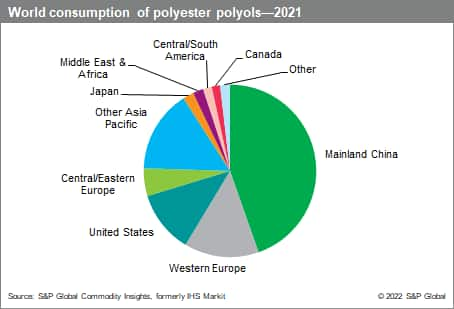
The most dynamic markets for polyester polyols continue to be mainland China, India, and other Asia Pacific markets; North America and Europe have also shown improved growth. In terms of end uses, increasing global demand for nonfoam applications, especially for polyurethane elastomers (often for shoes in mainland China and Other Asia) and artificial leather, are major growth drivers. Other important markets are polyurethanes/polyisocyanurates (PUR or PU/PIR) insulation foam, spurring demand for aromatic polyester polyols in the most developed industrial countries of North America and northwestern Europe, as well as in mainland China because of its move to build more energy-efficient buildings.

The largest market for polyester polyols is in a variety of nonfoam applications, accounting for more than 60% of global consumption. The largest nonfoam sector is in polyurethane elastomers, including shoe sole materials (the largest market in mainland China). Mainland China is the largest polyester polyols player and consumer in the world, but only for aliphatic polyester polyols; the mainland Chinese market for aromatic polyester polyols is still small.

Since 2011, the global growth for polyester polyols has been uneven, with only mild-to-low growth in Western Europe, the United States, and Japan, and the greatest growth in mainland China (3–4%), India, and Other Asia (high growth rates but on smaller volumes). As a result of the COVID-19 pandemic in 2020, the global economy and major downstream industries (automotive, construction, manufacturing) were severely impacted, and the global polyester polyols market declined. As the pandemic started receding in 2021, the polyurethane and polyols markets have also started recovering. Consumption of polyester polyols in global markets will grow at an average annual rate of around 3.5% during 2022–27.

The seven largest producers account for 37% of total polyester polyol production capacity. Largest global producers are Stepan, Huafeng Group, COIM, BASF, and Xuchuan Chemical (Suzhou) Company.

Over the last several years, the industry has offered a wider range of sustainable options for polyurethane manufacturers. Sustainable polyester polyols are the most viable option of all the polyurethane raw materials. Sustainable polyester polyols include products produced from bio-based raw materials and from recycled sources.

Special risk factors for further market development include the following:

  • The Russia-Ukraine conflict will slow global economic growth as policies tighten.
  • Impacts stemming from the COVID-19 pandemic and other variants.
  • Inflation to increase with producer and consumer prices surging.
  • Geopolitical risks, such as unrest in the Middle East and Africa.
  • The debt crisis of several European countries as well as the effects of Brexit.
  • The slowing of mainland China’s economy and a slowdown in many of its industrial and construction sectors; mainland China represents the largest share of the global market.

For more detailed information, see the table of contents, shown below.

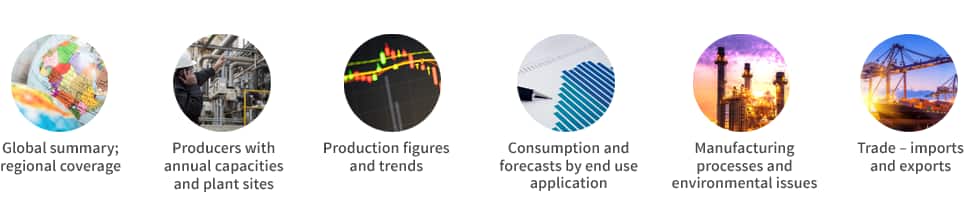
S&P Global’s Chemical Economics Handbook – Polyether Polyols is the comprehensive and trusted guide for anyone seeking information on this industry. This latest report details global and regional information, including:
Key Benefits

S&P Global’s Chemical Economics Handbook – Polyurethane Foams has been compiled using primary interviews with key suppliers, organizations and leading representatives from the industry in combination with S&P Global’s unparalleled access to upstream and downstream market intelligence, expert insights into industry dynamics, trade and economics.

This report can help you:

  • Identify trends and driving forces influencing chemical markets
  • Forecast and plan for future demand
  • Understand the impact of competing materials
  • Identify and evaluate potential customers and competitors
  • Evaluate producers
  • Track changing prices and trade movements
  • Analyze the impact of feedstocks, regulations, and other factors on chemical profitability

Buy individual report now Contact:
customercare@ihsmarkit.com
Find the chemical expertise you need Contact a chemical expert or request a demo today.
GET STARTED

Table of Contents

Section Page Number

Executive summary 6
Summary 8
Macroeconomic environment 11
Structure of the industry 12
Environmental issues 14
Manufacturing processes 15
Aliphatic polyester polyols 15
Specialty aliphatic polyester polyols 15
Polycaprolactone diols 15
Polycarbonate diols 16
Aromatic polyester polyols 16
Sustainable products 17
Supply and demand by region 19
United States 19
Producing companies 19
Production 20
Consumption 21
Aromatic polyester polyols 22
Aliphatic polyester polyols 23
Price 25
Trade 25
Canada 26
Producing companies 26
Salient statistics 26
Consumption 27
Trade 28
Mexico 28
Producing companies 28
Salient statistics 29
Consumption 29
Trade 30
Central and South America 31
Producing companies 31
Salient statistics 31
Consumption 33
Western Europe 34
Producing companies 35
Production 38
Consumption 39
Rigid foam 40
Elastomers 41
Coatings 41
Adhesives and sealants 42
Price 42
Trade 43
Central and Eastern Europe 43
Producing companies 43
Salient statistics 45
Production 45
Consumption 46
Trade 48
Middle East 48
Producing companies 48
Salient statistics 49
Consumption 49
Africa 50
Producing company 50
Consumption 50
Mainland China 50
Producing companies 50
Production 54
Consumption 54
Price 58
Trade 58
Japan 58
Producing companies 58
Production 60
Consumption 61
Price 63
Trade 64
Other Asia 64
India 64
Producing companies 64
Salient statistics 65
Consumption 66
South Korea 67
Producing companies 67
Salient statistics 68
Consumption 69
Taiwan 70
Producing companies 70
Salient statistics 71
Consumption 72
Southeast Asia 73
Producing companies 73
Salient statistics 74
Consumption 75
Oceania 76
Additional resources 78
Revisions 80
Data Workbook 81
Notice 82

Products & Solutions from related industries

Chemical Image

Acetic Acid - Chemical Economics Handbook (CEH)

Chemical Image

Acetaldehyde - Chemical Economics Handbook (CEH)

Chemical Image

Acetone - Chemical Economics Handbook (CEH)

Chemical Image

Acetonitrile - Chemical Economics Handbook (CEH)

Chemical Image

Acetic Anhydride - Chemical Economics Handbook (CEH)

Chemical Image

Acetylene - Chemical Economics Handbook (CEH)

Chemical Image

Acrylamide - Chemical Economics Handbook (CEH)

Chemical Image

Acrylic Acid, Acrylate Esters and Polymers - Chemical Economics Handbook (CEH)

Chemical Image

Acrylic and Modacrylic Fibers - Chemical Economics Handbook (CEH)

Chemical Image

Acrylic Surface Coatings - Chemical Economics Handbook (CEH)

Chemical Image

Acrylonitrile-Butadiene-Styrene (ABS) Resins -Chemical Economics Handbook-CEHl Economics Handbook (CEH)

Chemical Image

Acrylonitrile - Chemical Economics Handbook (CEH)

Chemical Image

Activated Carbon - Chemical Economics Handbook (CEH)

Chemical Image

Adipic Acid - Chemical Economics Handbook (CEH)

Chemical Image

Air Separation Gases - Chemical Economics Handbook (CEH)

Chemical Image

Alkyd/Polyester Surface Coatings - Chemical Economics Handbook (CEH)

Chemical Image

Alkyl Acetates - Chemical Economics Handbook (CEH)

Chemical Image

Alkylamines (C1-C6) - Chemical Economics Handbook (CEH)

{"items" : [ {"name":"share","enabled":true,"desc":"<strong>Share</strong>","mobdesc":"Share","options":[ {"name":"facebook","url":"https://www.facebook.com/sharer.php?u=http%3a%2f%2fssl.ihsmarkit.com%2fcommodityinsights%2fen%2fci%2fproducts%2fpolyester-plyols-chemical-economics-handbook.html","enabled":true},{"name":"twitter","url":"https://twitter.com/intent/tweet?url=http%3a%2f%2fssl.ihsmarkit.com%2fcommodityinsights%2fen%2fci%2fproducts%2fpolyester-plyols-chemical-economics-handbook.html&text=Polyester+Polyols+-+Chemical+Economics+Handbook+(CEH)+%7c+S%26P+Global","enabled":true},{"name":"linkedin","url":"https://www.linkedin.com/sharing/share-offsite/?url=http%3a%2f%2fssl.ihsmarkit.com%2fcommodityinsights%2fen%2fci%2fproducts%2fpolyester-plyols-chemical-economics-handbook.html","enabled":true},{"name":"email","url":"?subject=Polyester Polyols - Chemical Economics Handbook (CEH) | S&P Global&body=http%3a%2f%2fssl.ihsmarkit.com%2fcommodityinsights%2fen%2fci%2fproducts%2fpolyester-plyols-chemical-economics-handbook.html","enabled":true},{"name":"whatsapp","url":"https://api.whatsapp.com/send?text=Polyester+Polyols+-+Chemical+Economics+Handbook+(CEH)+%7c+S%26P+Global http%3a%2f%2fssl.ihsmarkit.com%2fcommodityinsights%2fen%2fci%2fproducts%2fpolyester-plyols-chemical-economics-handbook.html","enabled":true}]}, {"name":"rtt","enabled":true,"mobdesc":"Top"} ]}
Filter Sort
  • About S&P Global Commodity Insights
  • Media Center
  • Advertisers
  • Careers
  • Contact Us
  • History
  • Glossary
  • S&P Global Inc.
  • Our Values
  • Overview
  • Investor Relations
  • Customer Care & Sales
  • Careers
  • Our History
  • News Releases
  • Support by Division
  • Get Support
  • Corporate Responsibility
  • Ventures
  • Quarterly Earnings
  • Report an Ethics Concern
  • Leadership
  • Press
  • SEC Filings & Reports
  • Office Locations
  • IOSCO ESG Rating & Data Product Statements
  • © 2025 by S&P Global Inc. All rights reserved.
  • Terms of Use
  • Cookie Notice
  • Privacy Policy
  • Client Privacy Portal
  • Do Not Sell My Personal Information
  • Site Map