Customer Logins

Obtain the data you need to make the most informed decisions by accessing our extensive portfolio of information, analytics, and expertise. Sign in to the product or service center of your choice.

Customer Logins

My Logins

All Customer Logins
S&P Global
Explore S&P Global
  • S&P Global
  • S&P Dow Jones Indices
  • S&P Global Market Intelligence
  • S&P Global Mobility
  • S&P Global Commodity Insights
  • S&P Global Ratings
  • S&P Global Sustainable1
Close
Discover more about S&P Global’s offerings.
Investor Relations
  • Investor Relations Overview
  • Presentations
  • Investor Fact Book
  • News Releases
  • Quarterly Earnings
  • SEC Filings & Reports
  • Executive Committee
  • Merger Information
  • Governance
  • Stock & Dividends
  • Shareholder Services
  • Contact
English
  • Español
  • 中文网站
  • Português
  • 한국어
  • हिंदी
  • 日本語
Support
  • Get Support
  • System Notifications
  • Delivery Platforms
  • Regulatory Engagement
Login
  • Commodity Insights Login
  • Access IHS Markit Products
Register
logo Commodity Insights
  • Commodities
  • Products & Solutions
  • News & Research
  • Pricing & Benchmarks
  • Events
  • Sustainable1
  • Who We Are
  • S&P Global
  • S&P Dow Jones Indices
  • S&P Global Market Intelligence
  • S&P Global Mobility
  • S&P Global Commodity Insights
  • S&P Global Ratings
  • S&P Global Sustainable1
  • Oil Upstream LNG Natural Gas Electric Power Coal Shipping Chemicals Metals Agriculture
    Latest in Commodities
    Listen: Change Makers: Rodney Clemente, Energy Recovery

    Energy Recovery, with roots in the desalination industry, designs and manufactures energy-efficiency...

    India woos upstream oil and gas investors with changes on revenue sharing, fiscal incentives

    India has unveiled a new set of policies for its oil and gas sector, under which it aims to offer a...

    PACIFIC LNG: Key market indicators for July 14-18

    Platts JKM, the benchmark price reflecting LNG delivered to Northeast Asia, is expected to stay firm...

  • Agriculture & Food Biofuels Chemicals Fertilizers Clean Energy Technology Gas & Power Crude Oil Fuels & Refined Products LNG Steel & Metals Upstream & Midstream (Oil & Gas) Crop Science Carbon & Scenarios Shipping
    Capabilities
    Market Insights and Analytics CI Consulting Commodity Prices and Essential Market Data Real-Time News, Prices and Analysis Forward Curves and Risk Valuation Data
    Data and Distribution
  • Latest News Headlines All Topics Videos Podcasts Special Reports Infographics Insight Blog    Commodity Insights Magazine Commodity Insights LIVE
  • Our Methodology Methodology & Specifications Price Assessments Subscriber Notes Price Symbols Symbol Search & Directories Corrections Complaints
    References
    Market On Close Index Methodology Review & Change MOC Participation Guidelines Holiday Dunl.org SEE ALL REFERENCE TOOLS
  • All Events Webinars Conferences Methodology Education Training and eLearning Forums Conferences Live Global Energy Awards    CERAWeek
    Featured Events
    Webinars Watt's new in the current affairs of Battery Metals
    • 28 Aug 2025
    • Online
    Webinars APPEC 2025
    • 28 Aug 2025
    • Online
    Webinar Madrid Market Briefing
    • 16 Sep 2025
    • Madrid, Spain
  • Overview Contact Us Regulatory Engagement & Market Issues Commodity Insights LIVE

Flame Retardants

Specialty Chemicals Update Program

View Report for existing customers Go to Customer Login for existing customers
Learn more about Flame Retardants
Contact Sales
Contact Sales +1 844 301 7334

Published October 2023

Flame retardants are materials or chemicals that are used to deter or extinguish flame propagation in resins, elastomers, textiles, coatings, adhesives and sealants. The most important product categories are brominated compounds, organophosphorus compounds, chlorinated compounds, aluminum trihydroxide, antimony oxide, boron compounds, magnesium hydroxide and other flame retardant products.

The flame retardant industry is highly affected by regional regulations and standards (and differences) for construction and electrical/electronic applications. An increase in high-rise fires around the world has shown the need for improved safety standards for aluminum composite panel cladding used in building siding (or a method for upgrading older building materials [with older standards] to newer standards) using flame retardants for improved safety. Some flame retardants, especially brominated flame retardants, have restricted production and consumption.

The following pie chart shows world consumption of flame retardants:
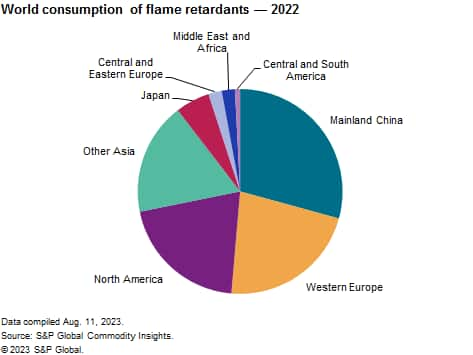
In mainland China, flame retardants have been experiencing rapid development following growth in the plastics market and also as a result of policy requirements. Brominated flame retardants were once the largest flame retardants segment consumed in mainland China. However, as a result of environmental issues, the use of brominated compounds has been restricted in recent years. Production and consumption of and trade in hexabromocyclododecane (HBCD) have been banned since 2016 except for some applications. The mainland Chinese government has highlighted the importance of halogen-free flame retardants, which is impacting the flame retardants market in mainland China.

Consumption of flame retardants in Europe, the Middle East and Africa is driven primarily by regulations in many industries, such as the building and construction (including housing, public and commercial buildings) and transportation industries (automobiles and buses). These regulations are implemented predominantly on a national level, which means there are no EU-wide unified fire protection regulations in place. Regulations differ from country to country within Europe, the Middle East and Africa.

The fastest growing flame retardant segments in North America are organophosphorus compounds and aluminum trihydroxide.

For more detailed information, see the table of contents, shown below.

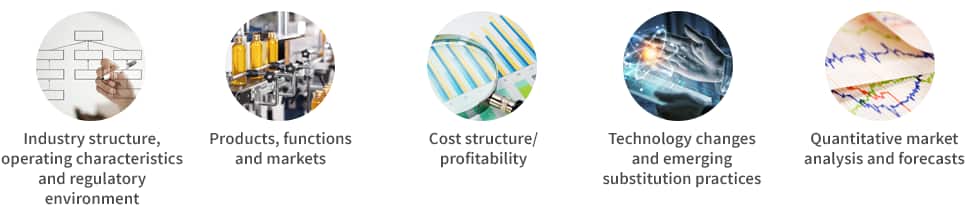
S&P Global’s Specialty Chemicals Update Program –Flame Retardants is the comprehensive and trusted guide for anyone seeking information on this industry. This latest report details global and regional information, including
Key benefits

S&P Global’s Specialty Chemicals Update Program –Flame Retardants has been compiled using primary interviews with key suppliers and organizations, and leading representatives from the industry in combination with S&P Global’s unparalleled access to upstream and downstream market intelligence and expert insights into industry dynamics, trade and economics.

This report can help you

  • Identify the competitive environment and key players
  • Assess key issues facing both suppliers and their end-use customers
  • Understand industry integration strategies
  • Keep abreast of industry structure changes, regulatory requirements, and other factors affecting profitability
  • Identify new business opportunities and threats
  • Follow important commercial developments
  • Recognize trends and driving forces influencing specialty chemical markets

Buy individual report now Contact:
customercare@ihsmarkit.com
Find the chemical market research and analysis you need Contact a chemical expert or request a demo today.
GET STARTED

Table of contents

Executive summary 7
North America 7
Central and South America 7
Europe, the Middle East and Africa 8
Mainland China 8
Japan 8
South Asia (India) 9
Southeast Asia 9
South Korea and Taiwan 9
Summary 10
Introduction 15
Abbreviations 17
Overview of the flame retardants industry 20
North America 20
Industry structure 20
Operating characteristics 26
Research and development 27
Manufacturing 28
Marketing 29
Cost structure and profitability 29
Government regulations 30
Critical factors for success 33
Central and South America 34
Western Europe 34
Industry structure 34
Associations and interest groups 37
Corporate activities 38
Operating characteristics 40
Research and development 40
Manufacturing 41
Marketing 42
Cost structure and profitability 43
Government regulations 44
Trends and opportunities 46
Critical factors for success 48
Central and Eastern Europe 49
Middle East and Africa 50
Mainland China 51
Industry structure 51
Operating characteristics 51
Government regulations 52
Japan 53
Industry structure 54
Operating characteristics 56
Research and development 57
Manufacturing 58
Marketing 59
Cost structure and profitability 59
Government regulations 60
Critical factors for success 61
Southeast Asia 61
Flame retardant products and markets 62
Products and functions 62
Chemical types 62
Product selection and substitution 66
Flame-retarded materials 68
Challenged flame retardants 70
North America 72
Summary 72
Brominated compounds 74
Consumption and markets 74
Additive flame retardants 76
Reactive flame retardants 78
Market participants 79
Prices 80
Organophosphorus compounds 80
Consumption and markets 80
Market participants 85
Prices 85
Chlorinated compounds 86
Consumption and markets 86
Market participants 87
Prices 87
Aluminum trihydroxide 87
Consumption and markets 87
Market participants 89
Prices 91
Antimony oxides 91
Consumption and markets 91
Market participants 92
Prices 93
Other 93
Consumption and markets 93
Boron compounds 93
Magnesium hydroxide and huntite/hydromagnesite 94
Melamine and derivatives 94
Molybdenum compounds 94
Intumescent phosphates 95
Red phosphorus 95
Miscellaneous 95
Market participants 95
Prices 97
Future trends and strategic issues 98
Central and South America 99
Summary 99
Market participants 101
Western Europe 102
Summary 102
Producing companies 103
Brominated compounds 109
Consumption and markets 109
Brominated polymers - PolyFR 111
Hexabromocyclododecane (HBCD) 111
Decabromodiphenyl ether (deca-BDE) 111
Tetrabromobisphenol A (TBBPA/TBBA) 111
Market participants 111
Organophosphorus compounds 112
Consumption and markets 112
Market participants 113
Chlorinated compounds 113
Consumption and markets 113
Market participants 114
Aluminum trihydroxide 115
Consumption and markets 115
Market participants 116
Antimony trioxide 117
Consumption and markets 117
Market participants 117
Other 118
Consumption and markets 118
Magnesium hydroxide 119
Melamine and derivatives 120
Ammonium polyphosphate 120
Huntite/hydromagnesite 120
Zinc borates and stannates 121
Red phosphorus 121
Guanidine/dicyandiamide 121
Nanoclays 121
Market participants 122
Ammonium polyphosphate 122
Guanidine/dicyandiamide 122
Magnesium hydroxide and huntite/hydromagnesite 122
Melamine (including melamine salts) 122
Red phosphorus 123
Zinc borate, sulfide and stannate 123
Prices 123
Future trends and strategic issues 125
Central and Eastern Europe 125
Consumption, markets and trends 125
Market participants 126
Middle East 128
Consumption, markets and trends 128
Market participants 129
Africa 131
Consumption, markets and trends 131
Mainland China 133
Summary 133
Brominated compounds 134
Consumption and markets 134
Market participants 135
Prices 137
Organophosphorus compounds 137
Consumption and markets 137
Market participants 138
Prices 140
Chlorinated compounds 140
Consumption and markets 140
Market participants 140
Prices 141
Aluminum trihydroxide 142
Consumption and markets 142
Market participants 142
Prices 144
Antimony trioxide 144
Consumption and markets 144
Market participants 144
Prices 145
Other 146
Future trends and strategic issues 146
Japan 147
Summary 147
Brominated compounds 149
Consumption and markets 149
Market participants 152
Prices 153
Organophosphorus compounds 153
Consumption and markets 153
Nonhalogenated compounds 154
Halogenated compounds 155
Market participants 156
Prices 157
Chlorinated compounds 157
Consumption and markets 157
Market participants 158
Prices 158
Aluminum trihydroxide 159
Consumption and markets 159
Market participants 160
Prices 161
Antimony oxides 162
Consumption and markets 162
Market participants 162
Prices 164
Other 164
Consumption and markets 164
Guanidine salts 164
Magnesium hydroxide 164
Miscellaneous 164
Market participants 164
Prices 165
Future trends and strategic issues 166
Other Asia 167
Summary 167
South Asia (India) 168
Consumption and markets 168
Market participants 170
South Korea and Taiwan 172
Consumption and markets 172
South Korea 172
Taiwan 174
Market participants 175
Southeast Asia 176
Consumption and markets 176
Market participants 178
Revisions 180
Data Workbook 181

Products & Solutions from related industries

Chemical Image

Acetic Acid - Chemical Economics Handbook (CEH)

Chemical Image

Acetaldehyde - Chemical Economics Handbook (CEH)

Chemical Image

Acetone - Chemical Economics Handbook (CEH)

Chemical Image

Acetonitrile - Chemical Economics Handbook (CEH)

Chemical Image

Acetic Anhydride - Chemical Economics Handbook (CEH)

Chemical Image

Acetylene - Chemical Economics Handbook (CEH)

Chemical Image

Acrylamide - Chemical Economics Handbook (CEH)

Chemical Image

Acrylic Acid, Acrylate Esters and Polymers - Chemical Economics Handbook (CEH)

Chemical Image

Acrylic and Modacrylic Fibers - Chemical Economics Handbook (CEH)

Chemical Image

Acrylic Surface Coatings - Chemical Economics Handbook (CEH)

Chemical Image

Acrylonitrile-Butadiene-Styrene (ABS) Resins -Chemical Economics Handbook-CEHl Economics Handbook (CEH)

Chemical Image

Acrylonitrile - Chemical Economics Handbook (CEH)

Chemical Image

Activated Carbon - Chemical Economics Handbook (CEH)

Chemical Image

Adipic Acid - Chemical Economics Handbook (CEH)

Chemical Image

Air Separation Gases - Chemical Economics Handbook (CEH)

Chemical Image

Alkyd/Polyester Surface Coatings - Chemical Economics Handbook (CEH)

Chemical Image

Alkyl Acetates - Chemical Economics Handbook (CEH)

Chemical Image

Alkylamines (C1-C6) - Chemical Economics Handbook (CEH)

{"items" : [ {"name":"share","enabled":true,"desc":"<strong>Share</strong>","mobdesc":"Share","options":[ {"name":"facebook","url":"https://www.facebook.com/sharer.php?u=http%3a%2f%2fssl.ihsmarkit.com%2fcommodityinsights%2fen%2fci%2fproducts%2fchemical-flame-retardants-scup.html","enabled":true},{"name":"twitter","url":"https://twitter.com/intent/tweet?url=http%3a%2f%2fssl.ihsmarkit.com%2fcommodityinsights%2fen%2fci%2fproducts%2fchemical-flame-retardants-scup.html&text=Flame+Retardants+-+Specialty+Chemicals+Update+Program+(SCUP)+%7c+S%26P+Global","enabled":true},{"name":"linkedin","url":"https://www.linkedin.com/sharing/share-offsite/?url=http%3a%2f%2fssl.ihsmarkit.com%2fcommodityinsights%2fen%2fci%2fproducts%2fchemical-flame-retardants-scup.html","enabled":true},{"name":"email","url":"?subject=Flame Retardants - Specialty Chemicals Update Program (SCUP) | S&P Global&body=http%3a%2f%2fssl.ihsmarkit.com%2fcommodityinsights%2fen%2fci%2fproducts%2fchemical-flame-retardants-scup.html","enabled":true},{"name":"whatsapp","url":"https://api.whatsapp.com/send?text=Flame+Retardants+-+Specialty+Chemicals+Update+Program+(SCUP)+%7c+S%26P+Global http%3a%2f%2fssl.ihsmarkit.com%2fcommodityinsights%2fen%2fci%2fproducts%2fchemical-flame-retardants-scup.html","enabled":true}]}, {"name":"rtt","enabled":true,"mobdesc":"Top"} ]}
Filter Sort
  • About S&P Global Commodity Insights
  • Media Center
  • Advertisers
  • Careers
  • Contact Us
  • History
  • Glossary
  • S&P Global Inc.
  • Our Values
  • Overview
  • Investor Relations
  • Customer Care & Sales
  • Careers
  • Our History
  • News Releases
  • Support by Division
  • Get Support
  • Corporate Responsibility
  • Ventures
  • Quarterly Earnings
  • Report an Ethics Concern
  • Leadership
  • Press
  • SEC Filings & Reports
  • Office Locations
  • IOSCO ESG Rating & Data Product Statements
  • © 2025 by S&P Global Inc. All rights reserved.
  • Terms of Use
  • Cookie Notice
  • Privacy Policy
  • Client Privacy Portal
  • Do Not Sell My Personal Information
  • Site Map